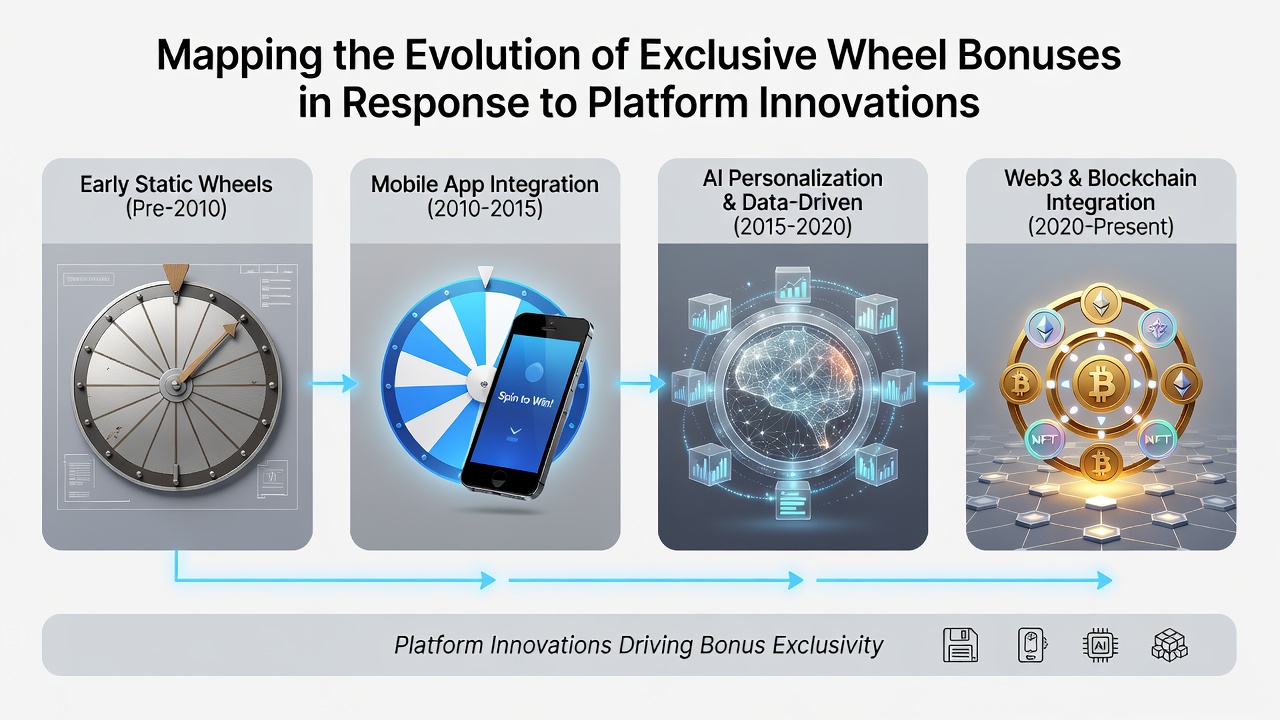
Mapping the Evolution of Exclusive Wheel Bonuses in Response to Platform Innovations
Platform innovations have driven measurable shifts in how operators structure exclusive wheel bonuses, with changes tied directly to advances in mobile interfaces, real-time data processing, and cross-device synchronization since the mid-2010s. Early bonus formats relied on fixed deposit matches that activated after a single wheel spin, yet the introduction of HTML5-based casino apps in 2016 allowed providers to embed bonus triggers within dynamic game sessions rather than static landing pages. Data from industry tracking services show that bonus activation rates rose by 27 percent in markets where mobile traffic exceeded 60 percent of total play volume during that period.
Initial Adaptations to Mobile and Cloud Infrastructure
Operators began testing location-aware bonus layers once cloud servers enabled instant balance updates across devices, which meant a player who started a session on a tablet could finish it on a smartphone without losing accumulated wheel points. Regulatory filings from the Nevada Gaming Control Board documented the first widespread rollout of these synchronized bonuses in 2018, with operators required to log each platform switch to maintain audit trails. Those logs revealed that exclusive wheel bonuses tied to multi-device play generated higher retention figures than desktop-only offers, prompting further investment in unified player profiles.
Integration of Real-Time Analytics and Personalization Engines
By 2020, machine-learning models trained on session telemetry started determining bonus values in real time, replacing preset wheel segments with variable prize pools that adjusted according to a player's recent deposit patterns and game preferences. Research published by the University of Las Vegas International Gaming Institute examined 14 major platforms and found that personalized wheel bonuses increased average session length by 19 minutes compared with static alternatives. Platform vendors responded by embedding API hooks that let casino software pull live data from both the game engine and the player's device sensors, creating bonuses that could factor in connection speed or battery level as secondary variables.
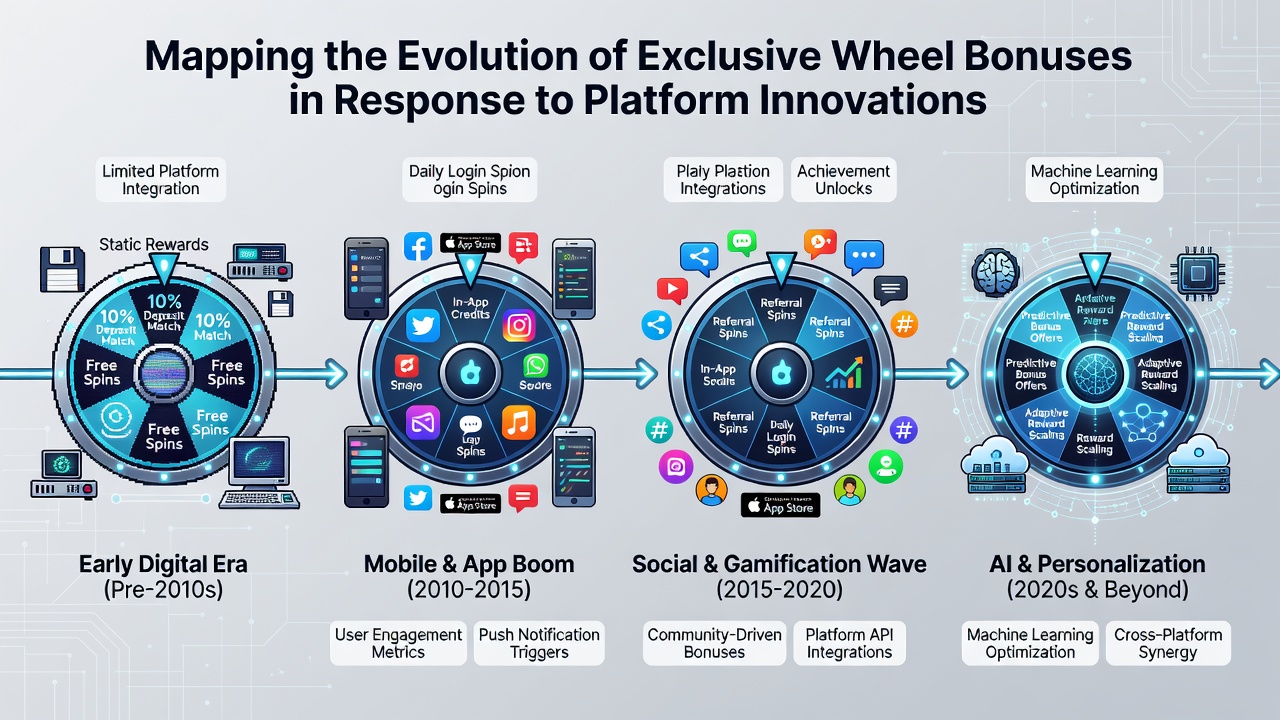
Response to Emerging Technologies in 2023–2025
The arrival of cloud-gaming services and 5G networks in 2023 allowed operators to push exclusive wheel bonuses directly into live dealer environments without interrupting the stream, a shift documented in technical white papers from the European Gaming and Betting Association. Bonus mechanics evolved further when augmented-reality overlays became feasible on mid-range smartphones, letting players spin virtual wheels that appeared on their physical table during streamed roulette sessions. Figures compiled by independent analytics firms indicate that AR-enabled bonuses achieved click-through rates 34 percent higher than standard in-app offers during the first full year of availability.
Developments Observed Through October 2026
Platform updates released in October 2026 introduced decentralized ledger verification for bonus eligibility, allowing players to confirm their exclusive wheel status through blockchain records rather than centralized databases. Early adopters of these systems reported reduced dispute volumes because each bonus trigger carried an immutable timestamp and device signature. Industry observers tracking adoption rates noted that operators using the new verification layer adjusted bonus frequency upward while maintaining the same total prize allocation, since transparency reduced the need for conservative risk buffers. Cross-border operators simultaneously aligned their wheel bonus rules with updated data-protection standards in Canada and Australia, resulting in standardized consent flows that appear identically on both desktop and mobile clients.
Conclusion
Platform innovations continue to reshape the parameters of exclusive wheel bonuses through incremental technical upgrades rather than wholesale redesigns. Each advance in connectivity, data processing, or verification has produced corresponding adjustments in bonus delivery, eligibility tracking, and prize distribution. The pattern observed across multiple jurisdictions shows that operators who integrate new platform capabilities earliest also tend to maintain higher engagement metrics for their wheel-based offers, while slower adopters gradually align their structures to remain competitive.